Necessary By Design
A church is nothing but a collection of imperfect people worshiping a perfect God who offers grace and mercy. Once we’re finally broken, we realize we need the salvation that is freely offered through Christ, who died and rose for us. If a church is doing its job, it will be reaching out to the lost and inviting them to fellowship, worship, discipleship, and a relationship with Christ. With the lost in mind, I always tell my team members that everyone brings baggage with them to church. Some people bring a small carry-on, and some people bring a shipping container. Regardless of the size of their baggage, everyone should be welcome in the House of the Lord, but the bigger the baggage, the more problematic it can be. From broken marriages to drug addiction to violent behavior, some of the lost that the church seeks to shepherd have some very serious issues.
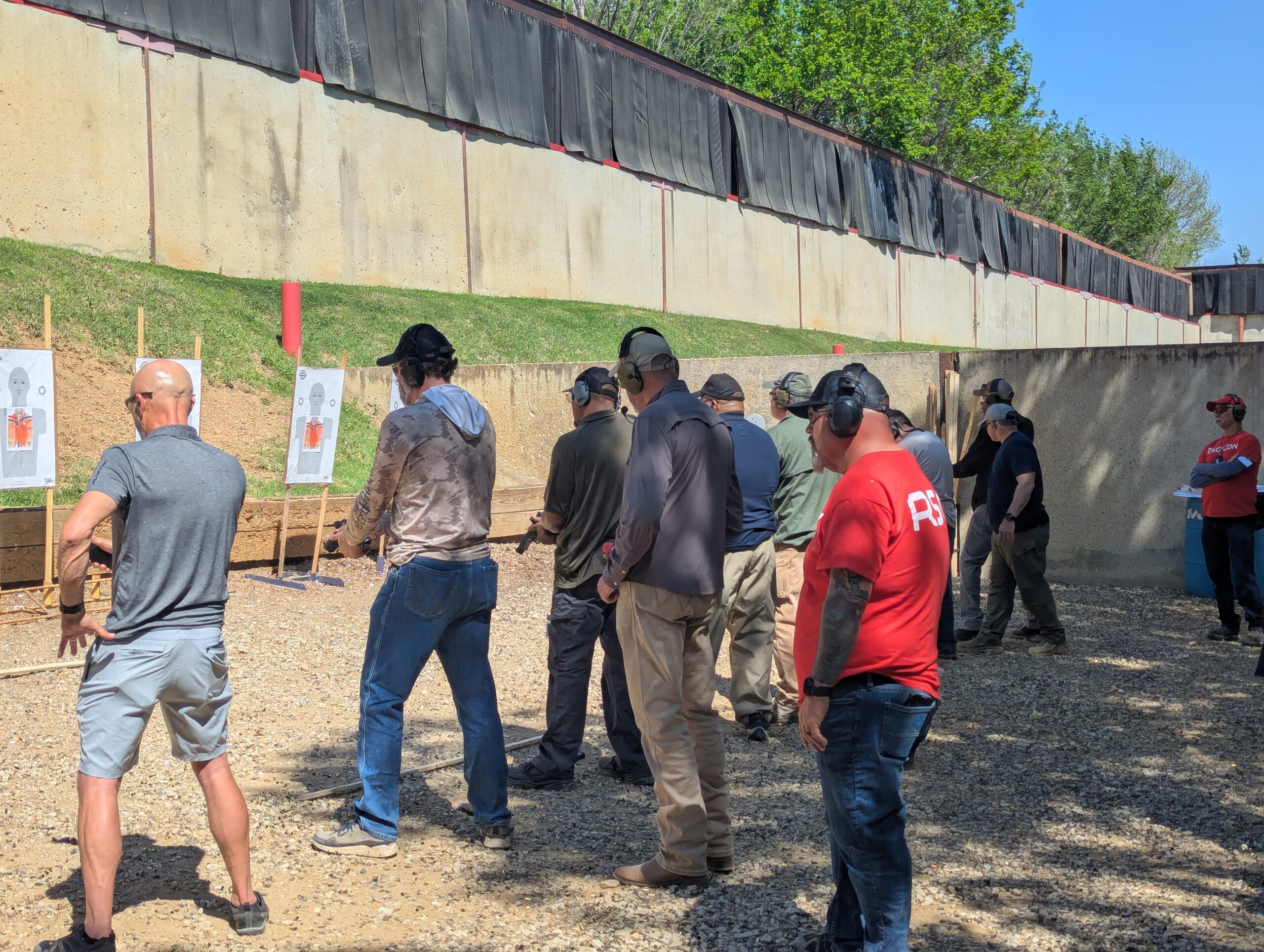
With that in mind, as a church security team leader and as a church security consultant, I was very interested in Steve Moses’ two training blocks on church security at this year’s Tactical Conference: Church Security Team Development and Church Security Team Member Essential Defensive Pistol Skills. The first was a classroom block focused on the administrative side of a church security team, while the second was a live fire block focused on the pistol skills needed by security team members. Both were very informative.
Classroom Block
The classroom block discussed the statistics of attacks on churches, including motives for and means of attacks, legal issues for team members, best practices for securing buildings and property, and ways to handle problematic visitors before things spiral into violence. While many people focus on the active killer event, violence in the church is most often triggered by domestic issues that spill over into the church (though those domestic issues can still turn into active killer events, e.g., Sutherland Springs church shooting). Steve suggested that if teams are paying attention to the congregation, they may be able to see potential issues developing before they manifest as violent behavior.
Legal issues for team members are an often-overlooked element for church security teams, both by the church and the team members. Focusing on volunteer team members, they are signing up to move toward danger and use force against others when they deem it necessary and reasonable. But this puts the team members at significant risk. First, of course, is the obvious risk of serious injury and even death, but there are numerous legal and social consequences if force is used, or is perceived to have been used, improperly. Steve discussed some general (non-state-specific) legal issues for team members and how to avoid them.
Live Fire Block
The live fire block started with a brief discussion of tactical anatomy and what the anatomically correct locations to target are, and why. What it boils down to for Steve was generally aiming for the high thoracic cavity, with a preference for the small area of the top half of the heart and the spinal cord just above it, which he called “thoracic park,” a catchy name I plan on using, with credit given.
The majority of the block, though, was focused on shooting the pistol qualification that Steve uses for his church security team. The qual was a relatively simple, though not necessarily easy, course of fire with five strings of fire and ten total rounds. All five strings included some kind of movement either during the draw or fire, used different ready positions (low ready, sul, covered ready, etc.), included distances from 2 to 10 yards, and required relatively precise marksmanship at a moderate pace.
The qual used an 8.5″x11″ target with a smaller 2″x4″ (I’d estimate) rectangle inside it representing the vital heart/spine area. All shots must be on the 8.5×11 paper, and half (5) of the shots must be in the smaller rectangle. Any shots off the 8.5×11 paper are an auto-fail. All strings have a 3-second par time. The five strings of fire were:
- From 11 yards, start with dominant foot forward, from covered (holster) ready, on signal, take one step forward and fire 1 shot.
- From 5 yds, from covered ready, sidestep left and fire 1 shot.
- From 5 yds, on “challenge” command, draw to low ready and issue “don’t move!” command. On start signal, from low ready, sidestep right and fire 3 shots.
- From 5 yds, from sul, move to 2 yd line while firing 2 shots.
- From 2 yds, from covered ready, move back to 5 yd line while firing 3 shots.
The qual seems to be quick and easy to administer while still testing most of the critical skills a team member will need. Certainly, there are other skills you could make an argument for testing (e.g., reloads), but I think Steve’s qual addresses the must-haves, and then allows the other skills to be practiced as the team feels is needed.
Wrap Up
There were multiple items I took away from both classes that I can incorporate either into how my own security team is operating or into how I assist other churches in their team development. From legal issues I hadn’t yet considered to new ways to emphasize critical pistol skills, I walked away from both training blocks with topics to research and develop further.
Train faithfully.

