
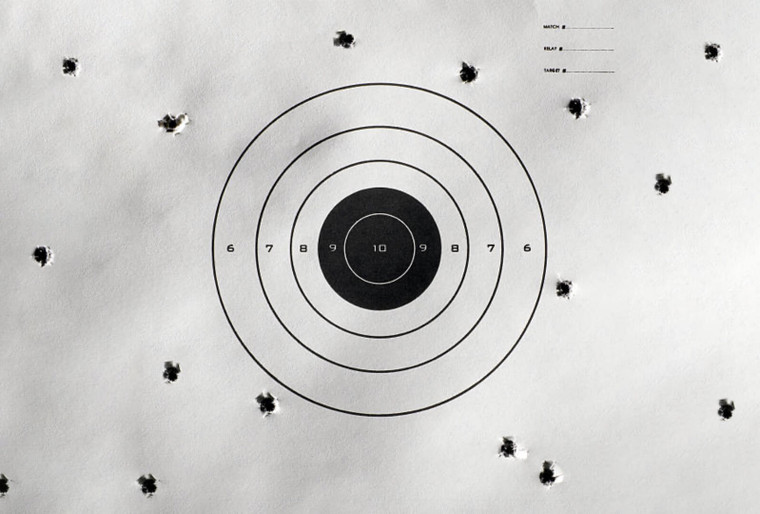
I’ve done a lot of shooting with people of all different skills and all different professions, including those who carry a gun professionally. One of the comments I frequently hear when shooters inspect their targets is something like, “Well, he’d be having a bad day,” or, “He’d be rethinking his choices…” Once I hear those words, I don’t even need to look at the target to assess their results.
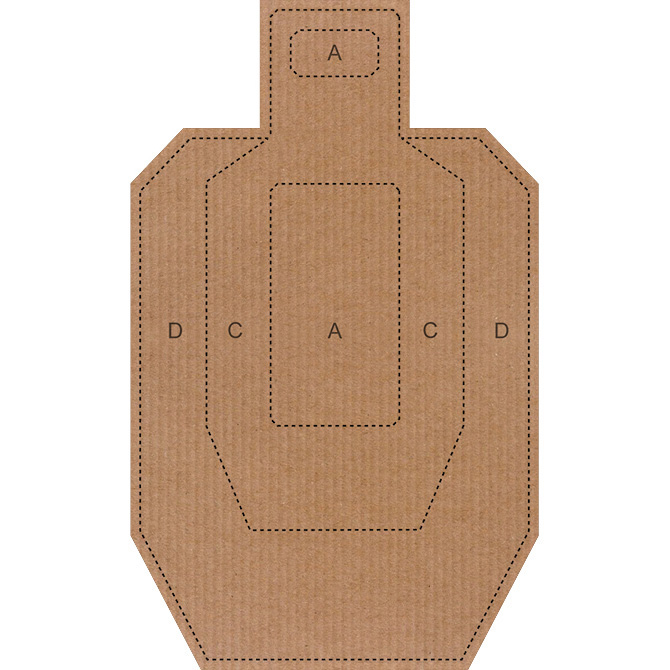
This is especially true when using a silhouette target, like a USPSA or IDPA target, that simulates a human torso. Shooters will put a dozen rounds in the D zone around where the belly button would be, and decide that while the hits aren’t perfect, they hit something, so that’s good enough. Unfortunately, it very likely isn’t good enough to stop an attacker.
The internet is rife with videos of all kinds of use-of-force incidents: cell phones, security cameras, police body cams, dash cams, etc. Some videos show assailants turn and run at the first sight of a defensive tool like a pistol; some show them change their mind when the first defensive shot is fired, no matter where it hits. Those situations are all well and good, and it’s certainly preferable to never have to fire a round, but we can’t bet our lives on a “soft-stop.” There’s always the possibility you’re not the first person to point a gun at your assailant. There’s the possibility you’re not the first person to shoot at them. There’s the possibility you’re not the first person to actually shoot them. There’s the possibility they’re in an altered mental state and don’t see your gun or notice they’ve been shot. You can find video after video of people being shot, even fatally (eventually), but they continue right on murdering. Soft-stops are great, up until they don’t work.
If a situation is bad enough that you need to draw a gun, if an assailant is a threat to your life, then you have to stop that threat immediately. The only reliable way to do that is a “hard-stop:” drop their blood pressure or disrupt their CNS. Shots to the abdomen or the arm will not accomplish that rapidly enough to stop their attack. They may die a week later from an infection, but that’s meaningless to you if you died from a knife to the throat. The point isn’t to kill, harm, or cause discomfort, the point is to stop the attack, immediately. That requires shots to the heart or the brain. In either case, your target is about a 4-5″ circle.
When training, don’t settle for ineffective hits anywhere on paper. If you want to train to effectively defend yourself, you have to train for the realities of human physiology. “Combat effective hits” are not just any hits to the human body; they are hits to the human body that bring about the effects on our assailant that we need to defend ourselves. To replicate that in training, your target is, at worst, an 8.5″x11″ piece of paper, or, at best, a 4″ circle.
There’s no problem using larger targets when training; I usually use USPSA and IDPA targets during my range sessions. Just remember that your goal isn’t to hit any spot on that larger target; it’s to hit a small spot on the target. The extra space is there to let you see your misses and figure out the corrective actions. Settling for mediocre hits won’t help you improve your skills, and it won’t help you defend yourself. Pushing for effective hits can be a little rough on the ego, but it pays off in the end.
Train effectively.

