Simple But Effective
As I mentioned in a previous post, part of Gabe White’s Undertrained Concealed Carry Tactics training block at TacCon was a drill intended to get students new to tactical shooting thinking about appropriate levels of force when faced with various threats. I don’t recall Gabe having a name for the drill, but “Gabe White’s Threats Drill” seems like a sufficient title (I teach shooting, not creative writing).
Gabe described the drill as being kind of an introduction to force-on-force training for students who currently have zero interest in that style of training. It’s a simple drill, but it can be used with both the physically fit 21-year-old and the frail 80-year-old, and they both need to understand the concepts the drill teaches. Of course, force-on-force training is more robust and teaches deeper, more complex skills and scenarios, but getting someone who was already hesitant to even take a basic CCW class to roll around on the ground with a training partner while they shoot sim rounds at each other can be all but impossible. This drill gets them to start considering self-defense concepts in a grounded way, without overloading them.
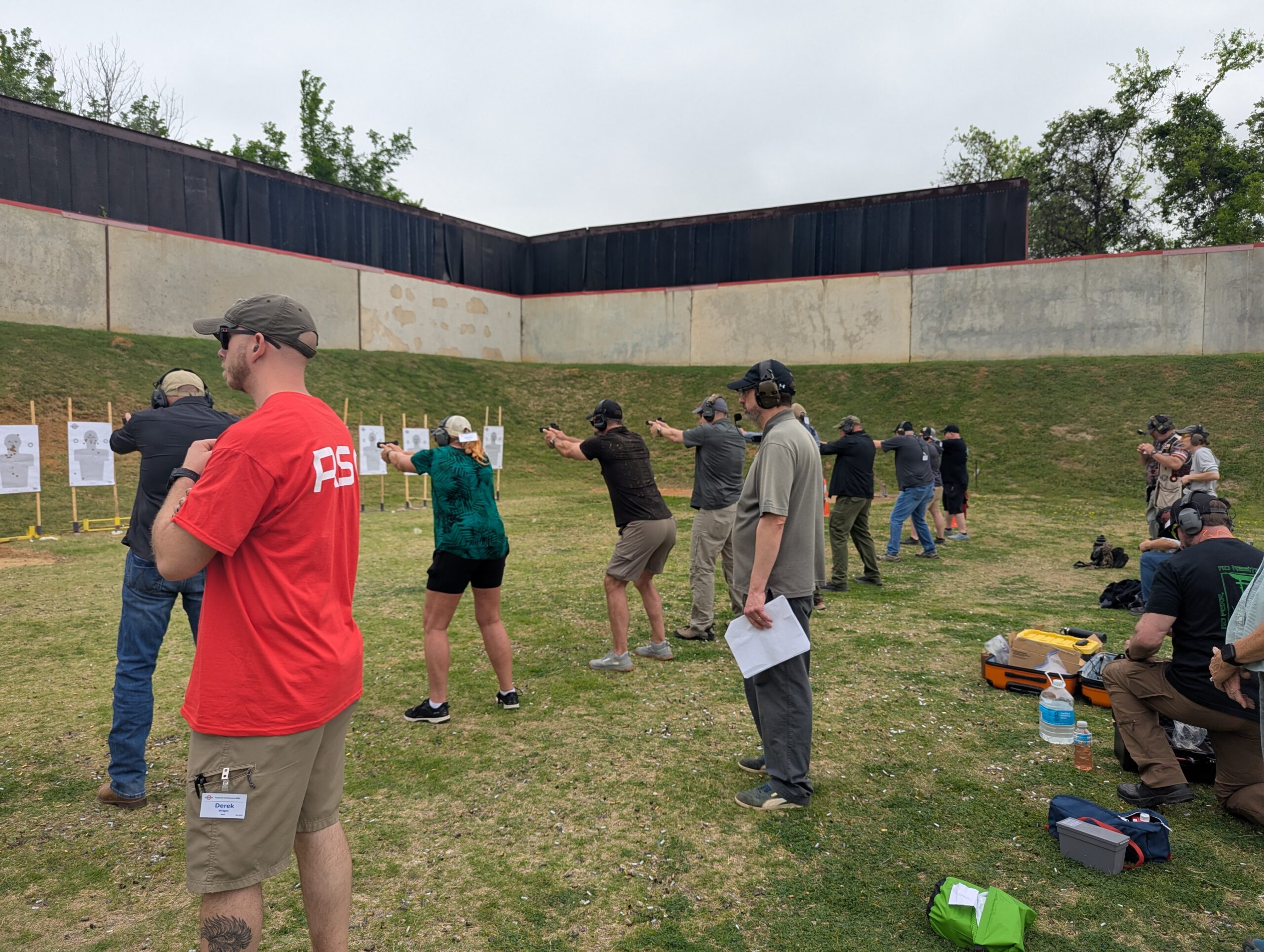
The drill is easy to administer during a class and works with students of all ages and abilities. To start, students face their target starting at the 5-yard line. Students are told that the target represents a potential assailant who is a clone of themselves in every aspect, except aggression and behavior. This is an important caveat because it sets the framework for what kind of threat they are facing. If the students are all imagining wildly different assailants, then it’s basically impossible for the instructor to provide guidance and feedback. Setting the understanding that the threat is the same age, sex, strength, speed, etc., as each student helps everyone understand the point of the drill quickly and intuitively.
After establishing the assailant the students face, the instructor then yells one of three threats their “assailant” is presenting to them: hands, knife, or gun. Each student then chooses what they believe to be an appropriate response to that threat at that distance. If a student shoots an “assailant” who presents the threat of “hands,” it’s an excellent opportunity to discuss with them, and the whole class, why they believed this similarly sized, skilled, strong, and unarmed assailant was a deadly threat. You can see the wheels turning in a lot of eyes as students now start considering these previously vague theories in a grounded, reality-based context.
The drill continues at 10 and 15 yards, and introduces a stop signal (e.g., a whistle) that comes at different times to signal that the “assailant” has changed behavior as students present and shoot their firearms. This begins to introduce the concepts that distance influences the imminence of the attack, and that having the emotional control to stop shooting at the appropriate time is just as important as starting shooting at the appropriate time.
I’ve already started incorporating the drill into my Concealed Carry and Defensive Pistolcraft classes. Based on the feedback and discussions the drill has already generated, I highly recommend it to any self-defense or defensive pistol instructors. It’s a great way to introduce novice students to the legal concepts of imminence and proportionality, and to rudimentary force-on-force training without overwhelming them.
Train appropriately.

