Ready To Grow?
So, you’re ready to put in a concerted effort to start improving your pistol skills, and you want to know what additional gear you need to get the process started?
First, the good news: you’ve already got the most important thing you need – commitment. Next is time, but if you dry fire appropriately, you don’t need hours per day; just a few minutes a few times per week will drive huge growth. You’ll need a pistol, but presumably you already have one if you’re trying to improve your pistol skills.
There are all kinds of other gear that you can get, some more effective than others, but most are optional. I’ve used quite a few different tools for dry fire: laser cartridges, a Mantis, different apps, the Ace Virtual system, the list goes on. I’ve used them all for a time, but ultimately I come back to a simple set of tools for my training: a shot timer, a metronome app, and one other sneaky tool that I’ll address at the end. That’s it, 2 or 3 tools. Anything else is optional, and may or may not be useful.
Shot Timer – This Will Be Painful
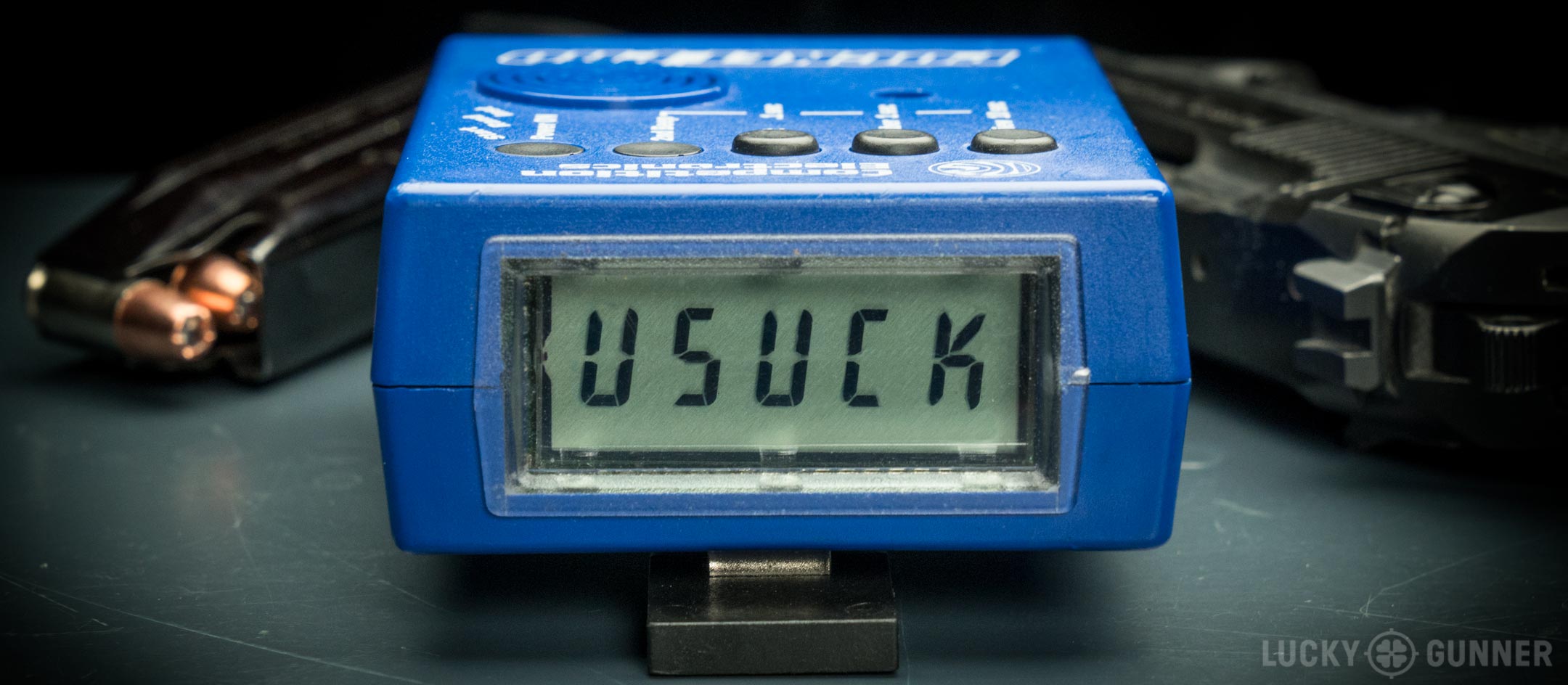
Ready for a rude awakening? Ready for the cold, hard truth? Ready to embrace the suck? If so, then you’re ready for a shot timer. The timer is a basic tool that measures the time between a start signal and your first shot, and the time between each of your subsequent shots. It’s the first tool I would recommend to anyone wanting to improve their shooting skills.
You can find timers selling for anywhere from around $130 up to $330. I used a Pact timer for a decade before it finally gave up the ghost, but I also added a higher-end timer that can detect a dry fire trigger press. Really, though, all you need is a basic model, and you can get a lot of work done both in live and dry fire. There are apps that you can get on your phone, and I have a couple, but they don’t really work for live fire; they never do a good job of accurately recording live shots. They also don’t really record dry presses either, but they do offer a random start signal and then a second “time’s up” beep that you can use to measure your dry reps. If money is tight, start with the free app for dry fire, then get a real timer once you’ve saved up the money.
The “issue” with the shot timer is that it just won’t lie to you. It will occasionally tell you how awesome you are, but usually, it tells you how poorly you did. But you really can’t improve something if you don’t measure it. Certainly, numbers aren’t the only things that matter, but they are critical to helping you improve.
Metronome App – Wait, what?
So what in the world is a metronome app used for in pistol training? If you’re thinking it’s for helping you shoot at a particular cadence, you’re wrong. You already have a tool that tells you when to press the trigger again: it’s called your sights.
I use the metronome app during dry fire draw training. As an example, let’s say you have a 2-second draw-to-first-shot, and you’re trying to work down to a 1.75-second draw. However, you either keep throwing shots outside the zone or wind up over time. What gives? You’re probably “trying too hard.” You want that 1.75-second draw so bad that you’re pushing as hard as you can possibly go, which is creating all kinds of unnecessary tension and stress, which is leading to highly inefficient technique and erratic shots. The metronome app alleviates the “mystery” of how long a particular amount of time actually is.
If you want the 1.75-second draw, set the metronome app for about 45 beats per minute (1 beat every 1.33 seconds) to start. Now, let the app play for a few beats to get a feel for the time. Next, start going through the motions of the draw and presentation, but without the pistol in hand. You’ll probably find it’s surprisingly easy to make the time. Now, add the pistol into the mix, and work to complete your presentation and trigger press right on the beat, neither early nor late.
Once you can consistently complete the draw easily, go back to the shot timer, but keep the pace that you’ve just developed. You’ll be about 0.3-0.4 seconds slower with a random start signal than with the known beat of the metronome, but that’s why we set the metronome time to 0.4 seconds faster than our target on the shot timer.
If you keep the pace you’ve learned, you should easily be at your goal. If things go off the rails, it’s likely an indicator that you’re outcome-focused rather than process-focused: you’re consumed with beating the timer rather than doing things correctly. You’ve already shown yourself you can do the draw fast enough to make the time you want; now you just have to have the emotional control to focus on and trust the process you’ve developed.
Red Dot Sight – The Sneaky Tool
No, this isn’t a traditional “tool,” but I would argue an RDS does as much, maybe even more, for your pistol training as a shot timer does. The common saying in the shooting world is that iron sights whisper to you, but a red dot screams at you. To this point, when someone tries a pistol with a red (or green, or gold) dot for the first time, one of the most common things I hear them say is something along the lines of, “It moves so much more than my gun with regular sights.”
In reality, no, it doesn’t. Both guns move the same amount, because you move the same amount. The difference is that iron sights don’t make all your movements readily apparent; they dull or suppress the amount of visual feedback you get. Red dots, on the other hand, show every little tremble and flinch that you make. Your movement is the same, the feedback is different. But that vibrant feedback from the RDS is incredibly valuable if you learn to observe and accept it. There are all kinds of advantages of red dots, but I think the value of them as a training tool is often overlooked.
If your pistol accepts a red dot, and if you are able to invest the money ($250-$600), it will pay huge dividends to your shooting in multiple ways.
Parting Shots
That’s it, those are the tools that I use all the time in dry and live fire. I still occasionally use a laser cartridge in dry fire as an honesty-check on my “hits” at speed, but I don’t want to rely on it as a crutch; I want to learn to use my sights to call my shots, both dry and live. And I do enjoy the Ace VR system, especially for working on moving targets and doing stage planning, but for me, it’s more game than training tool.
No matter the training tools I’ve tried over the years, I always come back to the tried-and-true basics. Whatever tools you use in your training, the most important thing is that you train.

