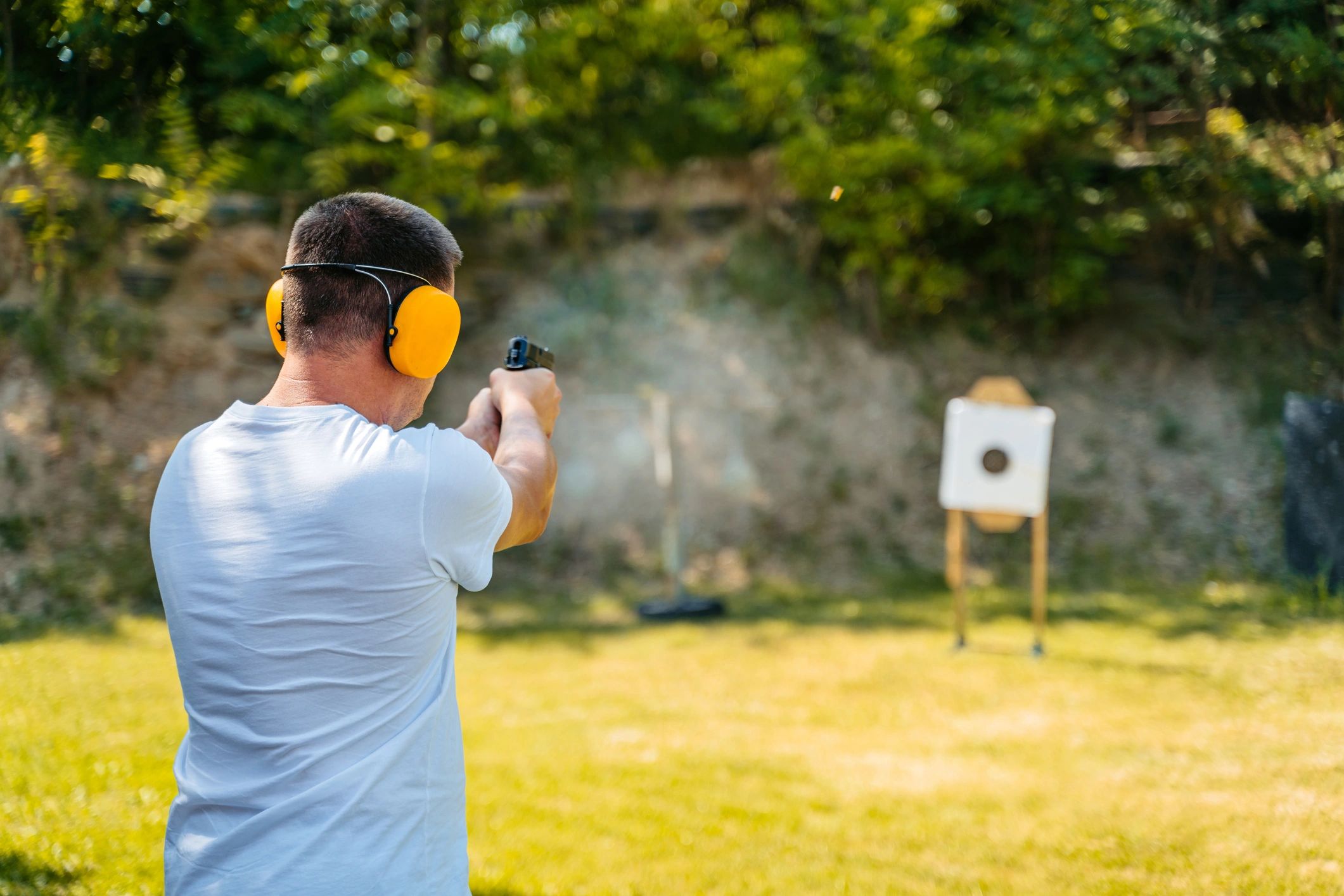
In the last post, I discussed the reasons why I personally train all the disciplines that I do, and why I encourage everyone to broaden and develop their skills. But that leads to an interesting question; one that applies to everything we work on, but for shooting can be expressed something like: are you shooting, or are you training? It’s very easy to shoot a couple hundred rounds, put (hopefully) a couple hundred holes in paper, and leave satisfied that we’ve done some good training. But did you really train, or did you just shoot?
Let’s Go Shoot
I frequently get invited by friends and acquaintances to go to the range and do some shooting. Usually, we go shoot some ammo, shoot the breeze, have some fun, and then call it a day. And if fellowship and fun are the goal, then there’s nothing wrong with any of that. Occasionally, though, someone will express frustration that they’re not getting any better, that they’ve been stuck with the same problems for months or even years. They’ll point to their target or timer and lament the results. So, I ask a few questions: what are you seeing as you shoot? What are you feeling as you shoot? What do you feel after you’re done shooting? What have you changed or experimented with? The answer to most all of those questions is usually something along the lines of a blank stare and a shoulder shrug.
Let’s Go Train
Training is more than just sending rounds down range. Training has little to do with the number of rounds you fire and almost everything to do with the mental effort you put in. If you leave the range and you’re not at least a little mentally fatigued, you probably didn’t train. If you finish up and haven’t identified specific skills or techniques you want to work on, you probably weren’t training. If you showed up with a plan that amounted to something like: shoot the ammo I brought, you probably weren’t training. On the other hand, if you showed up with a plan to work on your draws, tracking the sights, trigger control, transitions, reloads, Bill Drills, and long-range shooting all in a 2-hour session, you probably weren’t training either.
To train, we need to be focused on critically observing our results, not as an end: “dang, I missed,” but as a means to an end: “I missed. What does that miss tell me about what I was doing?”
You can burn through a lot of ammo, and patience, and not learn a thing if the range trip is:
- Bang, bang, bang
- Dang
- Bang, bang, bang
- Dang
- Bang, bang, bang
- Dang
On the other hand, training will be much more deliberate, much more effective, and might look something like:
- Bang, bang, bang
- Hmmmm
- My first shot is good, but my follow-up shots are consistently going high and right.
- I’m doing something different on the second and third shots that I’m not doing on the first.
- Maybe I’m rushing the trigger press on the follow-ups instead of letting the sights get back on target.
- Bang, bang, bang
- Hmmmm
- Nope, same result.
- Maybe I’m watching the sights instead of focusing on the target.
- Bang, bang, bang
- That’s better.
- So I need to drill keeping my focus on the target.
If you’re doing the latter, you’ll actually learn something, and probably save some money on ammo as well. Win, win! And even if you don’t know what the cause of your problem is, you will at least have identified the issue, and can seek advice on how to fix it.
Process vs Outcome
There’s a common saying among firearms-and really all- instructors: if you want to develop and build skill, you have to be process-focused, not outcome-focused. The first example above is outcome-focused: dang, I missed. The second example is process-focused: the outcome simply informs me what I was doing during the process of shooting, and the process is where I change the outcome. Put another way, training is about connecting the effect back to the cause.
Let’s train the process.

